Teacher training · 2 November 2026 · 4 min read
Beyond Asana: 9 Skills Every Great Yoga Teacher Needs
Great yoga teachers need more than good poses. Cueing, anatomy, sequencing, consent-based assists, trauma-informed teaching and more, explained by Dr. Kasi.
What makes a great yoga teacher is rarely the most impressive pose. It is the ability to see the students in front of you, keep them safe, guide them clearly and create a space where they want to come back. Those are skills, and like any skill they can be learned.
After more than 15 years of teaching and training over 610 teachers in Dubai, these are the nine skills I see separating good teachers from great ones.
1. Clear, simple cueing
Students follow your words, not your body. Great cues are short, specific and in the right order: foundation first, then the action, then the breath. "Press your big toe mounds down, lift your kneecaps, breathe in and reach up" works. A paragraph of poetry doesn't.
Practise saying the same cue in fewer words. Then practise it without demonstrating.
2. Practical anatomy
You don't need to be a doctor, but you do need to understand how joints move and where they get hurt: knees in lunges and twists, the lower back in forward folds, shoulders in chaturanga, wrists in weight-bearing poses. This is what lets you offer the right modification instead of a generic one.
3. Observation
Teach the room, not your plan. Watch for breath holding, strain on faces, knees collapsing inwards, shoulders creeping to ears. The best teachers adjust the class as it happens: slowing down, adding a rest, offering an easier option.
4. Intelligent sequencing
A good class has a beginning, a middle and an end: arriving, warming up, building, a peak, counterposes, cooling down and rest. Each pose prepares the body for the next. We go deeper in our guide to yoga sequencing.
5. Consent-based hands-on assists
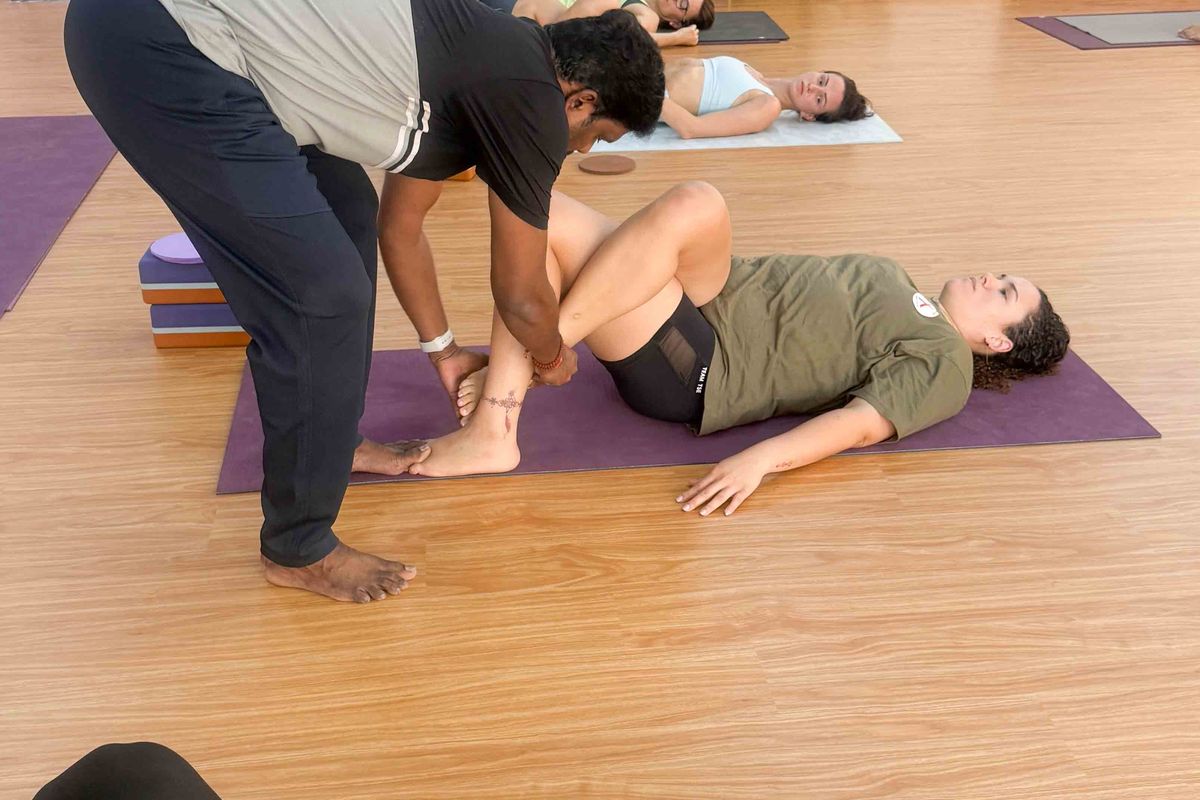
Touch can be powerful or harmful. Great teachers always ask first, offer assists only when they help, and respect a "no" without question. Many studios now use consent cards or simple verbal check-ins, and a good training teaches you how.
6. Trauma-informed language
You never know what a student is carrying. Trauma-informed teaching means giving choices ("you might", "if it feels right"), avoiding commands about how a student should feel, and making it easy to rest. It makes classes safer and more welcoming for everyone.
7. Breath, meditation and stillness
The poses are only one limb of yoga. Being able to guide pranayama, relaxation and meditation deepens every class, and is increasingly asked for in corporate and wellness settings. Our meditation teacher training builds this skill further.
8. Living philosophy and ethics
The Yoga Sutras and the eight limbs aren't just theory. They shape how you speak to students, keep boundaries, handle money and treat other teachers. Students feel the difference between a teacher who recites philosophy and one who lives it.
9. The business of teaching
Reliability, punctuality, clear communication with studios, a simple teaching CV, fair pricing for private sessions and knowing how registrations like Yoga Alliance and REPs UAE work. These decide how quickly you find classes. See our guide to yoga teacher careers in Dubai.
How to build these skills
- Teach often and ask for specific feedback, not just encouragement
- Record yourself teaching for ten minutes and listen back to your cues
- Take classes from many teachers and note what makes you feel safe and seen
- Keep studying anatomy, philosophy and a specialism after your training
How our training teaches them
In our RYT 200 yoga teacher training, every day includes a technique lab on alignment, cueing and safe adjustments, plus teaching practice in small groups with feedback from me. Anatomy is taught with an Ayurvedic lens, philosophy is taught to be lived, and the business side of teaching is part of the course.
Want to see it for yourself? WhatsApp us to sit in on a training session for free.
Frequently asked questions
Which skill should a new teacher work on first?
Clear cueing and observation. They make every other skill work.
Do I need to be very flexible to be a good teacher?
No. Students learn from teachers who understand bodies and explain clearly, not from teachers who can do the most extreme poses.
Are hands-on assists necessary?
No. Many excellent teachers rarely touch students. If you do assist, ask first and only assist when it helps.
Train with Dr. Kasi
Yoga Alliance RYT 200 in Dubai
Weekday, weekend or Hybrid for cabin crew and changing schedules. Compare all our yoga teacher training courses in Dubai, or read the yoga certification guide.