Teacher training · 2 November 2026 · 3 min read
Yoga Sequencing: How to Design Safe, Balanced Classes
A practical guide to yoga sequencing for teachers: class structure, peak poses, counterposes, Hatha and Vinyasa sequences, and common mistakes to avoid.
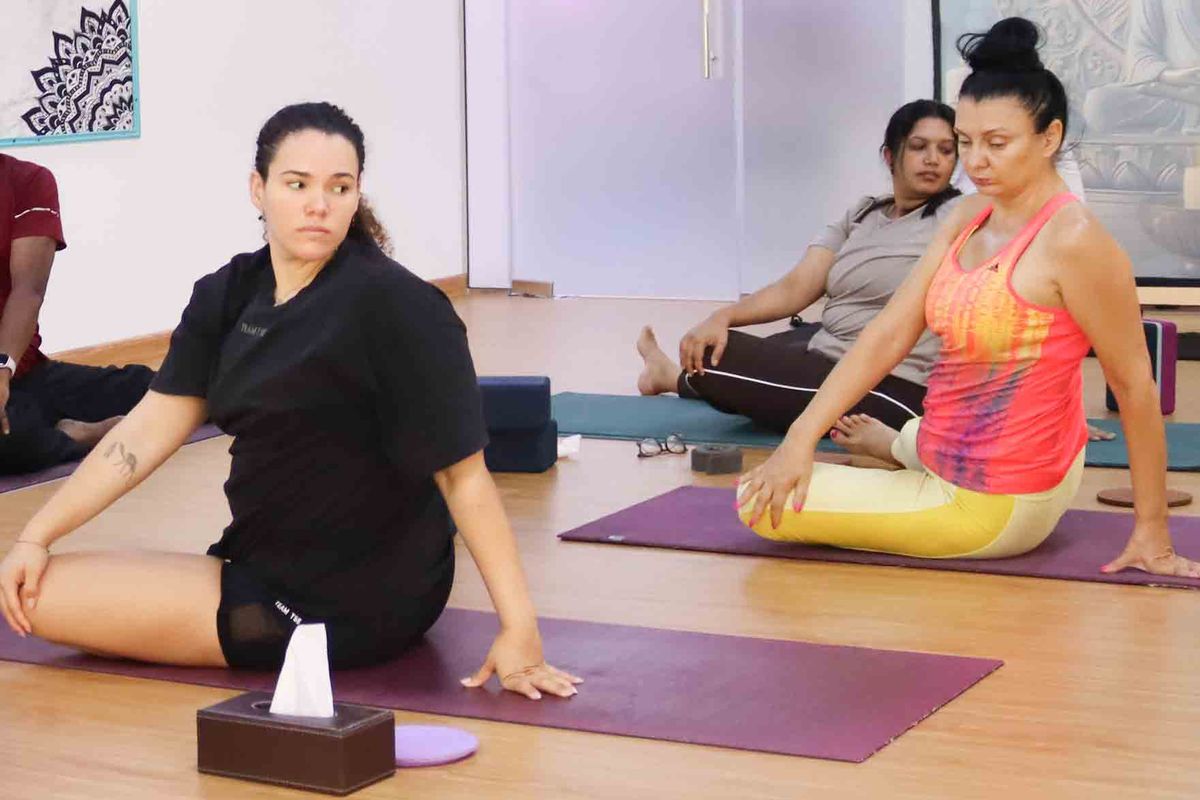
Good yoga sequencing means every pose prepares the body for the next one, the class builds steadily towards its most demanding moment, and then it unwinds so students leave calmer than they arrived. When a class is sequenced well, students feel safe and balanced, even if they can't say why.
This guide is the framework we teach in our yoga teacher training in Dubai. It works for Hatha and Vinyasa classes alike.
The shape of a balanced class
Think of a class as a wave: it rises, peaks and settles.
| Stage | Purpose | Roughly |
|---|---|---|
| Arrive | Breath, intention, settle the mind | 5 minutes |
| Warm up | Mobilise the spine and main joints | 10 minutes |
| Build | Standing poses, strength and heat | 20 minutes |
| Peak | The most demanding pose or flow | 5–10 minutes |
| Counterposes | Neutralise the spine after the peak | 5 minutes |
| Cool down | Seated poses, forward folds, twists | 10 minutes |
| Rest | Savasana and a short meditation | 5–10 minutes |
Times are for a 60-minute class. Adjust them for longer or shorter classes, but keep the order.
Five principles of intelligent sequencing
1. Prepare before you ask
Before a pose, warm the parts it needs. A backbend needs open hip flexors, shoulders and thoracic spine first. A balance needs grounded feet and an engaged core.
2. Build from simple to complex
Teach a shape in a simpler form first, then add load or complexity. For example: low lunge before warrior I, then crescent lunge.
3. Balance the spine
Move the spine in all its directions during the class: forward folds, backbends, side bends and twists. Follow a strong movement in one direction with a gentle neutralising pose.
4. Counterpose wisely
After backbends, use a gentle twist or a supported forward fold before deep folds. After strong twists, return to neutral. Counterposes should be softer than the pose they balance.
5. Match the energy to the time and the students
An early-morning class can build more heat. An evening class should end calmer. Beginners need more rest and repetition; experienced students can take longer holds and transitions.
Sequencing towards a peak pose
Choose one peak pose, then work backwards: which muscles must be strong, which must be open, and which simpler poses teach the same shape? A sequence for crow pose, for example, prepares wrists, core and hip flexion through cat-cow, plank variations, boat pose and garland pose before the attempt.
Hatha and Vinyasa: what changes
- Hatha: longer holds, more time on alignment and breath in each pose, rest between poses. The sequence can be simpler because each pose gets more attention.
- Vinyasa: poses linked by breath, so transitions matter as much as the poses. Repeat a short flow and add to it, rather than introducing new poses constantly.
Where breath and meditation fit
Calming pranayama such as extended exhalations and nadi shodhana fits best near the end, after the body has moved. Energising breath belongs early in the class. Always finish with real rest; savasana is not optional.
Common sequencing mistakes
- Too many new poses in one class. Repetition is how students learn.
- Deep stretches before the body is warm.
- No counterposes after strong backbends or twists.
- Rushing the ending and cutting savasana short.
- Teaching your own practice instead of the room in front of you.
Practise your sequencing
Write your sequence down, teach it to a friend, and ask how each part felt. Notice where students struggled; that is usually where the preparation was missing. Then adjust.
In our RYT 200 yoga teacher training in Dubai, you plan and teach sequences from your first weeks, with feedback in small groups, until you can lead a full class with confidence. You might also like our guide to the skills every great yoga teacher needs.
Frequently asked questions
How many poses should a 60-minute class include?
Often fewer than new teachers expect. Fifteen to twenty-five poses, with some repeated, is plenty for most classes.
Should every class have a peak pose?
No. A gentle, restorative or Yin class can follow the same wave without a demanding peak.
Can I use the same sequence every week?
Yes, especially for beginners. Repeating a sequence for a few weeks and then varying it helps students progress.
Train with Dr. Kasi
Yoga Alliance RYT 200 in Dubai
Weekday, weekend or Hybrid for cabin crew and changing schedules. Compare all our yoga teacher training courses in Dubai, or read the yoga certification guide.